
About Michael Bach
Twenty years on the inside of this work.
Most people who give DEIA advice have never had to defend a number to a CFO, lose a fight with general counsel, or watch a beautifully written policy quietly stop being enforced. Michael has. The advice on this site is shaped by the room, not the slide.

Origin story
KPMG, CCDI, and twenty years in between.
Michael's career in DEIA began inside one of the largest professional services firms in the world. He had been with KPMG in Canada since March 2005, and in December 2006 he took on the role of National Director of Diversity, Equity, and Inclusion, building the firm's first national DEI team from scratch and securing executive buy-in at the highest levels. Roughly two years into the role, the global firm seconded him as Deputy Chief Diversity Officer for KPMG International, where he authored the business case for and launched KPMG's first Global DEI Team, supporting cultural change across more than 150 countries.
Alongside that day job, on a volunteer basis, he served as Founding Chair of Pride at Work Canada from 2006 to 2012, the national 2SLGBTQI+ workplace advocacy organization. The two threads informed each other: corporate inclusion strategy on one side, community organizing and policy advocacy on the other.
In February 2013, after eight years inside KPMG, Michael founded the Canadian Centre for Diversity and Inclusion, and CCDI Consulting, two distinct but inter-related organizations, and led them as CEO for nearly a decade. The practice scaled to roughly fifty staff and eight million dollars in annual revenue, delivering more than two thousand DEIA consulting engagements and reaching more than fifty thousand professionals through learning programs. Proprietary tools like the Diversity Meter and Maturity Meter let clients see their organizations clearly, in data, instead of in vibes.
Since November 2022, Michael has run an independent advisory practice. The clients range from Fortune 100 companies to global professional services firms to government, across four continents. Same posture across all of them: candid, well-evidenced, and useful in the room where the decision actually gets made.
That trajectory matters because it shaped the worldview: this work does not live in the HR org chart. It lives in finance, in legal, in operations, in the way a senior leader actually allocates time on a Wednesday morning. If it cannot survive there, it does not survive at all.

2006-2013 · KPMG era
National Director of Diversity, Equity and Inclusion, KPMG in Canada. Toronto Star feature.
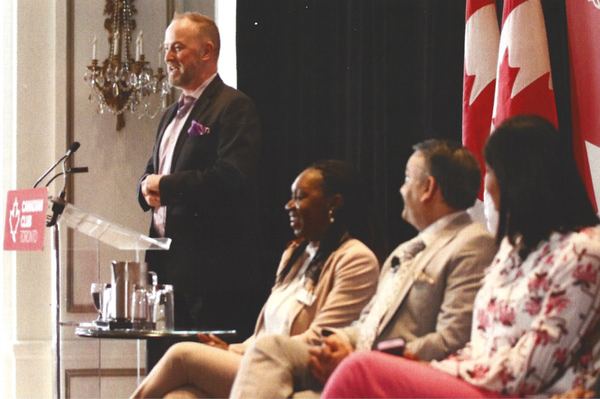
2013-2022 · CCDI era
Founder and CEO of the Canadian Centre for Diversity and Inclusion, and CCDI Consulting. Canadian Club of Toronto keynote.
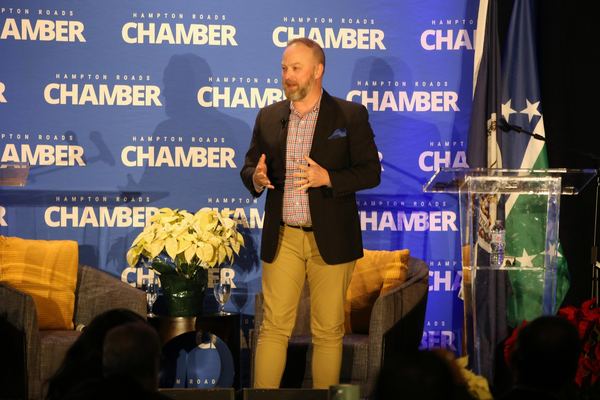
Present · Independent practice
Advisory work and keynotes for Fortune 100 companies, professional services firms, and government, across four continents.
The thesis
Most DEIA work collapses the moment finance asks a question.
The phrase survives contact with the C-suite is not a slogan. It is the actual test. A DEIA strategy that reads well in a deck and falls apart when a CFO asks how it is measured, what it costs, and what gets cut if revenue dips, is not strategy. It is theatre.
The work that holds up is the work that has already answered those questions before it walked into the room. It can name its operating metrics, its trade-offs, its risk posture, and its legal exposure. It can be defended in plain English to a board, to a regulator, to a hostile journalist, and to a skeptical line manager who has been doing the job longer than the consultant has been alive. The aesthetics of it are almost beside the point.
Michael's practice is built around that test. The advisory work, the keynotes, and the books all come back to the same question: when this gets stress-tested in a room without a single sympathetic face, does it still stand up.
What I push back on
Four things most DEIA practice gets wrong.
These are the patterns Michael will name in a discovery call, push back on in a workshop, and refuse to put his name on as a consultant. Not opinions. Working positions, sharpened over twenty years.
-
01 · The theatre problem
Statements are not strategy.
A company can issue the strongest possible public statement and still do nothing structural the following Monday. Michael's first move with any client is to separate the communications artifact from the actual operating change. They are not the same artifact, and they rarely have the same owner.
-
02 · The metric problem
Representation is not the only number.
Headcount diversity is a lagging indicator and an incomplete one. The numbers that actually move outcomes are about access: who gets the work, the sponsorship, the stretch role, the candid feedback. If a program cannot point to those, the dashboard is mostly cosmetic.
-
03 · The ownership problem
DEIA is not an HR program.
When the entire mandate sits with one team in HR or one Chief Diversity Officer with no real authority, the work has been pre-built to fail. Inclusion belongs to operating leaders, with finance and legal in the room, or it does not belong to anyone.
-
04 · The fragility problem
If one resignation kills it, it was never real.
A program that disappears the day a sponsor leaves was a personality, not a system. Real work is encoded in policy, in budget, in performance management, and in the things a manager has to do whether they personally believe in them or not. That is the bar.
Track record
Range, not stature.
Twenty years working in this field looks like a lot of different rooms. Fortune 100 companies and small mission-driven non-profits. Global professional services firms and federal government agencies. Boardrooms in Toronto, Mumbai, Johannesburg, London, and Sydney. Audiences of three executives and audiences of three thousand.
The point is not the logos. The point is that the same operating questions show up everywhere: how do we measure this, who actually owns it, what does it cost when it fails, and what is the defensible position when someone in the room decides to test it. Michael has been answering those questions, in front of those people, for twenty years.
Credentials
- Post-Graduate Certificate in Diversity Management, Cornell University
- Cornell Certified Diversity Professional, Advanced Practitioner (CCDP/AP)
- Intercultural Development Inventory Qualified Assessor
- Former National Director of DEI, KPMG in Canada (2006 to 2013)
- Former Deputy Chief Diversity Officer, KPMG International (2007 to 2010)
- Founding CEO, Canadian Centre for Diversity and Inclusion, and CCDI Consulting (2013 to 2022)
- Founding Chair, Pride at Work Canada (2006 to 2012)
A working life
Recognition
Michael has been named one of the 10 Most Influential DE&I Leaders Revamping the Future by CIO Views Magazine (2023), received the Lifetime Achievement Award for LGBTQ Inclusion from the Inspire Awards, and been recognized by Catalyst Canada Honours as a Human Resources and Diversity Leader. Earlier in his career he was named LGBTQ Person of the Year by the Inspire Awards, one of Women of Influence's Canadian Diversity Champions, and received the Out on Bay Street LGBT Advocate Workplace Award, and the TRIEC's Immigrant Success Award Canadian HR Reporter Individual Achievement Award.
Books
Three best-sellers, two lanes.
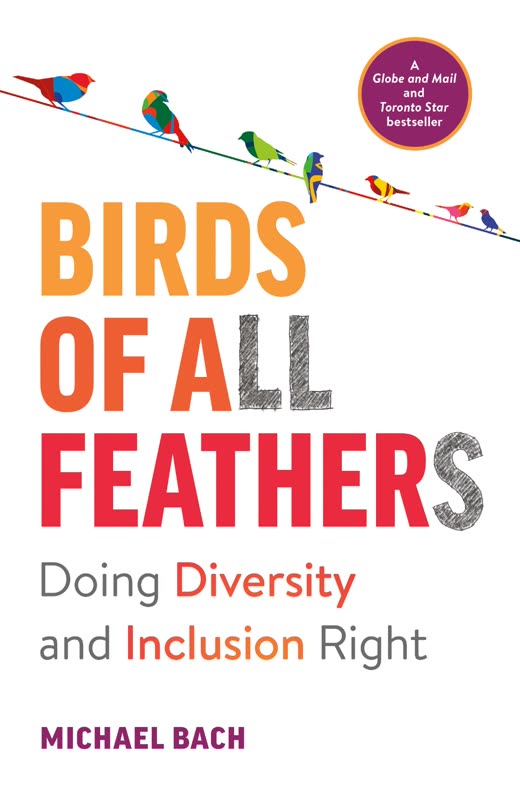
Birds of All Feathers (2020) is the practitioner book on DEIA fundamentals. Globe and Mail, Toronto Star, and Amazon best-seller; silver-medal winner in the 2020 Nautilus Book Awards.
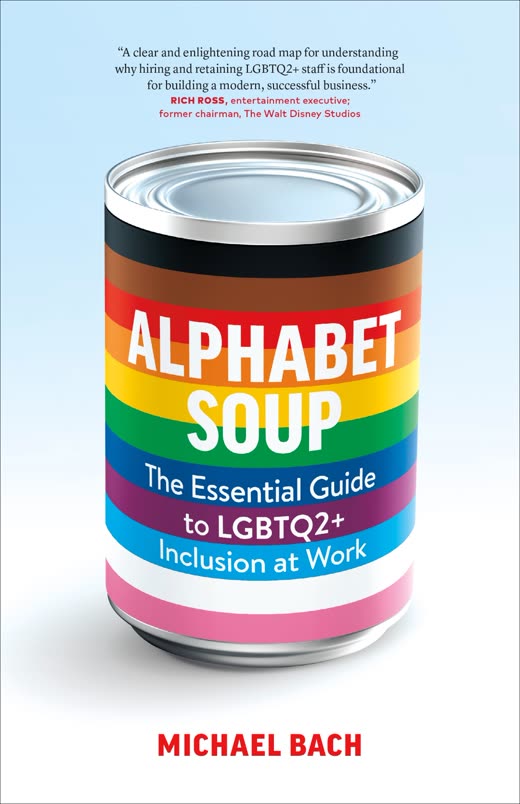
Alphabet Soup (2022) is the workplace book on 2SLGBTQI+ inclusion: history, language, and what employers actually have to do differently. Toronto Star and Amazon best-seller.
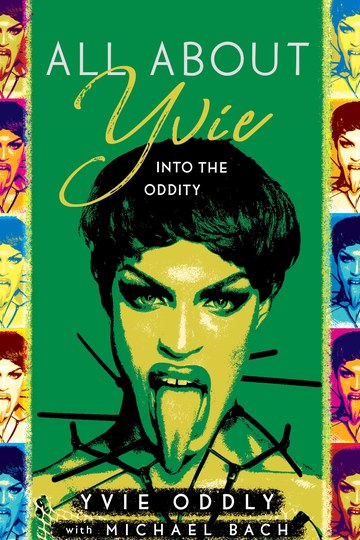
All About Yvie (2024) is the co-authored memoir, in a different lane entirely, and not the right entry point for organizational work. USA Today and Amazon best-seller.
If this fits
Tell me what's actually on the table.
The first conversation is a short, candid scoping call. Nothing performative. If what you describe is a fit, Michael will say so and propose a way forward. If it isn't, he'll say that too, and usually point you somewhere more useful.